

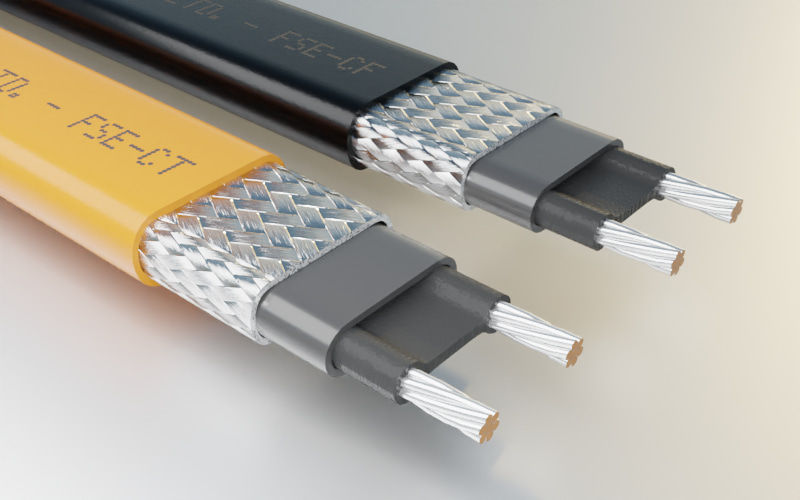

کابل هیت تریس خودتنظیم صنعتی Heat Trace Freezstop Extra (FSE و FSEw)
سازنده: Heat Trace | نام محصول: Freezstop Extra | مدلها: FSE / FSEw | نوع محصول: کابل گرمایشی خودتنظیم صنعتی | کاربرد: جلوگیری از یخزدگی و حفظ دمای فرآیند
۱. معرفی کابل هیت تریس خودتنظیم FSE و FSEw
کابلهای حرارتی Freezstop Extra (FSE) و Freezstop Extra Wide (FSEw) از محصولات شرکت Heat Trace هستند که برای جلوگیری از یخزدگی لولهها و تجهیزات صنعتی و همچنین حفظ دمای سیالات در خطوط فرآیندی مورد استفاده قرار میگیرند.
این محصولات از نوع کابلهای حرارتی خودتنظیمشونده (Self-Regulating Heating Cables) هستند. فناوری خودتنظیمی باعث میشود توان حرارتی کابل متناسب با تغییرات دما تغییر کند؛ بهطوریکه با کاهش دما، خروجی حرارتی افزایش مییابد و با افزایش دما، توان گرمایشی کاهش پیدا میکند.
کابلهای FSE و FSEw برای استفاده در تأسیسات صنعتی طراحی شدهاند و به دلیل ساختار ویژه خود، قابلیت برش در طول موردنیاز در محل پروژه را دارند. این ویژگی باعث میشود نصب کابل در مسیرهای مختلف لولهکشی آسانتر شود و بتوان طول کابل را با نیاز واقعی سیستم تطبیق داد.
۲. کاربردهای اصلی کابلهای FSE و FSEw
کابلهای حرارتی FSE و FSEw در صنایع مختلف برای تأمین گرمایش الکتریکی و کنترل دما استفاده میشوند. مهمترین کاربردهای آنها عبارتاند از:
جلوگیری از یخزدگی لولهها
جلوگیری از یخزدگی آب و سایر سیالات در خطوط لوله و کمک به حفظ قابلیت انتقال سیال در شرایط محیطی سرد.
حفظ دمای فرآیند
حفظ دمای موردنیاز سیالات در خطوط فرآیندی صنعتی، مشروط به انتخاب صحیح توان و طراحی حرارتی سیستم.
جبران اتلاف حرارتی
جبران گرمای ازدسترفته از سطح لولهها و تجهیزات برای کمک به حفظ دمای موردنیاز سیستم.
کاربرد در محیطهای سرد
محافظت از خطوط لوله در محیطهای سرد و شرایط آبوهوایی نامساعد، با توجه به محدوده دمایی مجاز کابل.
صنایع نفت، گاز و پتروشیمی
استفاده در تأسیسات صنعتی و خطوط انتقال سیالات، مطابق شرایط فرآیندی و الزامات فنی پروژه.
نیروگاهها و صنایع شیمیایی
استفاده در سیستمهای لولهکشی و تجهیزات صنعتی که به گرمایش الکتریکی و کنترل دما نیاز دارند.
گرمایش تجهیزات و مخازن
حفظ دمای عملیاتی موردنیاز در مخازن و سیستمهای لولهکشی، در صورت طراحی مناسب سیستم گرمایش.
قابلیت انتخاب مدل متناسب
امکان بررسی توانهای مختلف و انواع روکش بر اساس اتلاف حرارتی، شرایط محیطی و الزامات نصب.
۳. تفاوت مدلهای FSE و FSEw
مهمترین تفاوت میان دو مدل FSE و FSEw، توان حرارتی نامی و ابعاد کابل است. مدل FSE با توانهای ۱۷ و ۳۱ وات بر متر و مدل FSEw با توانهای ۴۵ و ۶۰ وات بر متر عرضه میشود. انتخاب بین این مدلها باید با توجه به محاسبات حرارتی و محدودیتهای فنی سیستم انجام شود.
Freezstop Extra (FSE)
این مدل در توانهای نامی ۱۷ و ۳۱ وات بر متر عرضه میشود و برای محافظت در برابر یخزدگی و حفظ دمای خطوط لوله صنعتی طراحی شده است.
Freezstop Extra Wide (FSEw)
این مدل با توانهای نامی ۴۵ و ۶۰ وات بر متر برای کاربردهایی با نیاز حرارتی بالاتر قابل بررسی است؛ مشروط به تأیید محاسبات طراحی و محدودیتهای دمایی.
خروجی حرارتی خودتنظیم
در هر دو مدل، توان خروجی با دمای کابل و شرایط نصب تغییر میکند. توان واقعی در زمان کار لزوماً با توان نامی یکسان نیست.
انتخاب بر اساس شرایط پروژه
قطر لوله، دمای محیط، دمای نگهداری، نوع عایق، ولتاژ تغذیه و طول مدار از عوامل اصلی انتخاب مدل مناسب هستند.
۴. مشخصات فنی کابلهای FSE و FSEw
مشخصات فنی اعلامشده برای این خانواده شامل موارد زیر است. این اطلاعات باید پیش از سفارش و اجرا با دیتاشیت رسمی نسخه دقیق کابل و کد سفارش تطبیق داده شوند.
نوع کابل: خودتنظیمشونده (Self-Regulating)
ولتاژ تغذیه: ۱۲ تا ۲۷۷ ولت AC
توان نامی مدل FSE: برابر با ۱۷ و ۳۱ وات بر متر
توان نامی مدل FSEw: برابر با ۴۵ و ۶۰ وات بر متر
حداکثر دمای مواجهه پیوسته در حالت روشن: ۱۰۰ درجه سانتیگراد
حداکثر دمای مواجهه مجاز در حالت خاموش: ۱۰۰ درجه سانتیگراد
حداقل دمای کارکرد: منفی ۴۰ درجه سانتیگراد
حداقل دمای نصب: منفی ۴۰ درجه سانتیگراد
کلاس دمایی مدل FSE با توان تا ۳۱ وات بر متر: T4
کلاس دمایی مدل FSEw با توان تا ۶۰ وات بر متر: T3
درجه حفاظت اعلامشده برای مدل FSE: IP67
حداقل شعاع خمش مدل FSE: حدود ۳۵ میلیمتر
حداقل شعاع خمش مدل FSEw: حدود ۴۰ میلیمتر
سایز رزوه گلند مدل FSE: M20
سایز رزوه گلند مدل FSEw: M25
۵. ابعاد و وزن کابل
ابعاد و وزن تقریبی انواع کابل به شرح زیر است:
مدل FSE-CT: ابعاد مقطع حدود ۱۲٫۷ در ۵٫۹۵ میلیمتر و وزن تقریبی هر ۱۰۰ متر برابر با ۱۲٫۴ کیلوگرم است.
مدل FSE-CF: دارای روکش فلوروپلیمری و وزن تقریبی هر ۱۰۰ متر برابر با ۱۳٫۲ کیلوگرم است.
مدل FSEw-CT: ابعاد مقطع حدود ۱۵٫۴ در ۶٫۵ میلیمتر و وزن تقریبی هر ۱۰۰ متر برابر با ۱۷ کیلوگرم است.
مدل FSEw-CF: ابعاد مقطع حدود ۱۵٫۱ در ۶٫۲ میلیمتر و وزن تقریبی هر ۱۰۰ متر برابر با ۱۷٫۷ کیلوگرم است.
۶. ساختار کابل هیت تریس خودتنظیمشونده
کابلهای FSE و FSEw از اجزای مختلفی تشکیل شدهاند که هر کدام وظیفه مشخصی در انتقال جریان برق، تولید حرارت و حفاظت از کابل دارند. ساختار اصلی کابلهای خودتنظیم شامل هادیهای الکتریکی، ماتریس نیمهرسانای خودتنظیمشونده، عایق الکتریکی، لایه محافظ و روکش خارجی است.
| جزء کابل | وظیفه و عملکرد |
|---|---|
| هادیهای الکتریکی | انتقال جریان برق در طول کابل و تأمین انرژی الکتریکی موردنیاز برای تولید حرارت. |
| ماتریس نیمهرسانای خودتنظیمشونده | بخش اصلی تولید حرارت که مقاومت الکتریکی آن با تغییر دما تغییر میکند. |
| عایق الکتریکی | جداکردن اجزای الکتریکی و کمک به جلوگیری از اتصال ناخواسته و حفاظت از ساختار داخلی کابل. |
| لایه محافظ و بافت فلزی | کمک به حفاظت مکانیکی و تأمین الزامات الکتریکی و اتصال زمین، مطابق طراحی کابل. |
| روکش خارجی | محافظت از کابل در برابر شرایط محیطی و خوردگی. جنس روکش با توجه به نسخه محصول متفاوت است. |
نحوه عملکرد فناوری خودتنظیمی
در کابلهای خودتنظیمشونده، مقاومت الکتریکی ماتریس نیمهرسانا با تغییر دما تغییر میکند. با کاهش دمای لوله، توان گرمایشی کابل افزایش پیدا میکند و با افزایش دما، توان خروجی کاهش مییابد. این ویژگی به کابل کمک میکند خود را با تغییرات دمایی در طول مسیر تطبیق دهد.
با وجود این قابلیت، خودتنظیمی به معنی ثابتماندن دمای فرآیند یا بینیازی از محاسبات حرارتی نیست. برای تأمین دمای موردنیاز باید توان واقعی کابل در شرایط نصب، میزان اتلاف حرارتی، عایقکاری و محدودیتهای دمایی بررسی شوند.
۷. انواع روکش کابل و تفاوت CT و CF
کابلهای خانواده Freezstop Extra با دو نوع روکش اصلی CT و CF عرضه میشوند. انتخاب بین این دو نسخه باید بر اساس شرایط محیطی، مقاومت شیمیایی موردنیاز، احتمال تماس با مواد خورنده و الزامات مکانیکی پروژه انجام شود.
| نوع روکش | مدلها | ویژگی اصلی |
|---|---|---|
| CT | FSE-CT و FSEw-CT | نسخه دارای روکش ترموپلاستیک برای شرایط محیطی متناسب با مشخصات شیمیایی و مکانیکی آن. |
| CF | FSE-CF و FSEw-CF | نسخه دارای روکش فلوروپلیمری برای کاربردهایی که مقاومت شیمیایی و خوردگی بالاتری موردنیاز است. |
روکش CT
کد CT نشاندهنده نسخه دارای روکش ترموپلاستیک است. این نوع روکش برای حفاظت از کابل در شرایط محیطی متناسب با مشخصات شیمیایی و مکانیکی آن طراحی شده است. مدلهای دارای این روکش عبارتاند از FSE-CT و FSEw-CT.
روکش CF
کد CF نشاندهنده نسخه دارای روکش فلوروپلیمری است. این نوع روکش در کاربردهایی که مقاومت شیمیایی و خوردگی بالاتری موردنیاز است، قابل بررسی است. مدلهای دارای این روکش عبارتاند از FSE-CF و FSEw-CF.
۸. ویژگیهای خودتنظیمی و مزایای عملکردی
یکی از مهمترین ویژگیهای کابلهای FSE و FSEw، فناوری خودتنظیمشونده آنهاست. این فناوری امکان تغییر توان حرارتی کابل متناسب با تغییرات دما را فراهم میکند و در طراحی سیستمهای گرمایش الکتریکی صنعتی مزایای مختلفی دارد.
| ویژگی | توضیحات |
|---|---|
| تنظیم خودکار توان حرارتی | توان حرارتی متناسب با تغییرات دما تغییر میکند. |
| کاهش احتمال گرمشدن بیش از حد | رفتار خودتنظیمی به کاهش خطر گرمشدن بیش از حد در شرایط تعریفشده سازنده کمک میکند. |
| تطبیق با تغییرات دمایی | امکان تطبیق بهتر خروجی حرارتی با تغییرات دما در طول مسیر لوله. |
| قابلیت برش در محل | امکان برش کابل در طول موردنیاز، مطابق دستورالعمل سازنده. |
| سهولت اجرا | قابلیت استفاده در مسیرهای مختلف و پیچیده لولهکشی صنعتی. |
| تنوع روکش | امکان انتخاب روکش ترموپلاستیک یا فلوروپلیمری متناسب با شرایط محیطی. |
| انعطافپذیری طراحی | قابلیت طراحی سیستم برای محافظت در برابر یخزدگی یا حفظ دمای فرآیندی. |
مطابق مشخصات سازنده، این خانواده دارای ویژگی ایمنی ذاتی در برابر گرمشدن بیش از حد ناشی از همپوشانی در شرایط تعریفشده محصول است. با این حال، این ویژگی جایگزین حفاظت الکتریکی، اتصال زمین، انتخاب صحیح تجهیزات جانبی و رعایت دستورالعمل نصب نیست.
۹. حداکثر طول مدار و جریان راهاندازی
حداکثر طول مجاز مدار کابل به توان نامی، دمای راهاندازی، ولتاژ تغذیه و جریان نامی کلید حفاظتی بستگی دارد. در کابلهای خودتنظیمشونده، جریان راهاندازی در دماهای پایین معمولاً بیشتر از جریان کارکرد پایدار است. به همین دلیل، هرچه دمای راهاندازی پایینتر باشد، ممکن است طول مجاز کابل در هر مدار کاهش پیدا کند.
نمونه مقادیر طول مدار برای مدل FSE با توان ۱۷ وات بر متر
| دمای راهاندازی | ولتاژ تغذیه | کلید حفاظتی | حداکثر طول اعلامشده |
|---|---|---|---|
| منفی ۴۰ درجه سانتیگراد | ۲۳۰ ولت | ۱۶ آمپر، تیپ C | حدود ۴۴ متر |
| منفی ۲۰ درجه سانتیگراد | ۲۳۰ ولت | ۱۶ آمپر، تیپ C | حدود ۶۶ متر |
| صفر درجه سانتیگراد | ۲۳۰ ولت | ۱۶ آمپر، تیپ C | حدود ۹۸ متر |
نمونه مقادیر طول مدار برای مدل FSE با توان ۳۱ وات بر متر
| دمای راهاندازی | ولتاژ تغذیه | کلید حفاظتی | حداکثر طول اعلامشده |
|---|---|---|---|
| منفی ۴۰ درجه سانتیگراد | ۲۳۰ ولت | ۱۶ آمپر، تیپ C | حدود ۳۰ متر |
| منفی ۲۰ درجه سانتیگراد | ۲۳۰ ولت | ۱۶ آمپر، تیپ C | حدود ۴۶ متر |
| صفر درجه سانتیگراد | ۲۳۰ ولت | ۱۶ آمپر، تیپ C | حدود ۶۸ متر |
۱۰. روش نصب کابل هیت تریس FSE و FSEw
نصب کابلهای FSE و FSEw باید مطابق دستورالعمل سازنده و استانداردهای مربوط به گرمایش الکتریکی صنعتی انجام شود. اجرای صحیح کابل، انتخاب تجهیزات جانبی سازگار و انجام آزمونهای الکتریکی پیش از راهاندازی، نقش مهمی در ایمنی و عملکرد سیستم دارند.
- بررسی مسیر لولهکشی و تعیین طول موردنیاز کابل
- محاسبه اتلاف حرارتی لوله بر اساس قطر، جنس، دمای محیط، دمای نگهداری سیال و نوع عایق
- انتخاب توان مناسب کابل و نوع روکش متناسب با شرایط محیطی
- آمادهسازی سطح لوله و حذف آلودگیها و لبههای تیز که ممکن است به کابل آسیب برسانند
- نصب کابل روی لوله مطابق نقشه طراحی و روشهای مجاز سازنده
- استفاده از تجهیزات جانبی مناسب برای اتصال برق، انتهای کابل، انشعابها و جعبههای اتصال
- انجام آزمایشهای الکتریکی لازم پیش از عایقکاری
- نصب عایق حرارتی و پوشش نهایی مطابق الزامات پروژه
- انجام آزمایشهای نهایی و ثبت نتایج برای تحویل سیستم
استفاده از کیتهای اتصال سازگار با مدل کابل و رعایت شعاع خمش مجاز اهمیت زیادی دارد. همچنین در محیطهای مستعد انفجار، تجهیزات جانبی و روش نصب باید با تأییدیههای مربوط به همان منطقه مطابقت داشته باشند.
۱۱. استانداردها و تأییدیههای ایمنی
کابلهای FSE و FSEw برای کاربردهای صنعتی طراحی شدهاند و سازنده برای نسخههای مربوطه تأییدیههایی جهت استفاده در محیطهای عادی و برخی مناطق مستعد انفجار معرفی کرده است. استفاده در محیطهای خطرناک باید بر اساس گواهی معتبر و مشخصات دقیق مدل انتخابی انجام شود.
- بررسی نوع منطقه خطرناک و طبقهبندی آن
- تطبیق کلاس دمایی موردنیاز با مشخصات کابل
- بررسی حداکثر دمای سطح مجاز
- انتخاب نوع روکش متناسب با شرایط محیطی و شیمیایی
- بررسی سازگاری گلندها، جعبههای اتصال و تجهیزات جانبی
- بررسی اعتبار گواهی و انطباق کد دقیق محصول با شرایط پروژه
کلاس دمایی T4 برای مدل FSE با توان تا ۳۱ وات بر متر و کلاس دمایی T3 برای مدل FSEw با توان تا ۶۰ وات بر متر اعلام شده است. این کلاسها به محدودیت دمای سطح تجهیزات در محیطهای مستعد انفجار مربوط میشوند و با حداکثر دمای مواجهه کابل یکسان نیستند.
۱۲. مزایا و محدودیتهای محصول
تغییر توان حرارتی متناسب با تغییرات دما و کمک به تطبیق خروجی گرمایی با شرایط مسیر.
امکان تنظیم طول کابل متناسب با طول واقعی مسیر لولهکشی، مطابق دستورالعمل سازنده.
ارائه توانهای نامی ۱۷، ۳۱، ۴۵ و ۶۰ وات بر متر برای کاربردهای مختلف.
امکان انتخاب نسخه CT یا CF با توجه به شرایط محیطی و الزامات مقاومت شیمیایی.
قابلیت استفاده برای جلوگیری از یخزدگی و حفظ دمای فرآیندی در سیستمهای طراحیشده متناسب با مشخصات محصول.
لزوم محاسبه اتلاف حرارتی، جریان راهاندازی، طول مدار و شرایط واقعی نصب پیش از انتخاب کابل.
ملاحظات مهم در طراحی
- توان واقعی کابل به شرایط نصب و دمای لوله وابسته است.
- طول مدار باید با جریان راهاندازی و مشخصات کلید حفاظتی تطبیق داده شود.
- انتخاب روکش باید بر اساس سازگاری شیمیایی و شرایط محیطی انجام شود.
- برای عملکرد مناسب، محاسبات اتلاف حرارتی و انتخاب عایق مناسب ضروری است.
- در محیطهای مستعد انفجار، رعایت الزامات و تأییدیههای مربوطه الزامی است.
- خودتنظیمی کابل به معنی بینیازی از حفاظت الکتریکی یا کنترل فرآیند نیست.
۱۳. راهنمای انتخاب مدل مناسب
برای انتخاب مدل مناسب از خانواده Freezstop Extra و Freezstop Extra Wide باید ابتدا شرایط عملیاتی پروژه مشخص شود. انتخاب کابل باید بر اساس نیاز حرارتی واقعی خط، محدودیتهای دمایی، ولتاژ تغذیه، شرایط نصب و الزامات ایمنی انجام شود.
انتخاب بین FSE و FSEw
مدل FSE با توان ۱۷ یا ۳۱ وات بر متر، در صورتی قابل انتخاب است که توان موردنیاز برای جبران اتلاف حرارتی خط با ظرفیت این مدل مطابقت داشته باشد.
مدل FSEw با توان ۴۵ یا ۶۰ وات بر متر، برای شرایطی قابل بررسی است که نیاز حرارتی بالاتری وجود داشته باشد و دمای سطح، کلاس دمایی، طول مدار و شرایط نصب استفاده از آن را مجاز کنند.
انتخاب بین CT و CF
انتخاب نوع روکش CT یا CF باید بر اساس شرایط خوردگی، مواد شیمیایی موجود در محیط، دمای فرآیند و الزامات مکانیکی انجام شود. روکش فلوروپلیمری نیز به معنای مقاومت مطلق در برابر تمام مواد شیمیایی نیست و سازگاری آن باید بررسی شود.
اطلاعات موردنیاز برای انتخاب دقیق کابل
- قطر و جنس لوله
- طول مسیر گرمایش
- حداقل دمای محیط
- دمای موردنیاز برای نگهداری سیال
- نوع و ضخامت عایق حرارتی
- ولتاژ تغذیه
- نوع محیط نصب، عادی یا مستعد انفجار
- شرایط شیمیایی و خورندگی محیط
- طول مدار و مشخصات تجهیزات حفاظتی
- کد سفارش دقیق، نوع روکش و دیتاشیت رسمی کابل
مدل با توان نامی بالاتر لزوماً برای همه پروژهها مناسبتر نیست. انتخاب نهایی باید بر اساس محاسبات حرارتی و الکتریکی، دمای واقعی کارکرد، محدودیتهای نصب و الزامات ایمنی انجام شود.
۱۴. جمعبندی؛ کابل هیت تریس Freezstop Extra
کابل هیت تریس خودتنظیم صنعتی FSE و FSEw
کابلهای حرارتی خودتنظیمشونده Heat Trace Freezstop Extra (FSE) و Freezstop Extra Wide (FSEw) راهکاری برای جلوگیری از یخزدگی و حفظ دمای خطوط لوله و تجهیزات صنعتی هستند. این محصولات با توانهای نامی ۱۷، ۳۱، ۴۵ و ۶۰ وات بر متر، امکان انتخاب ظرفیت گرمایشی متناسب با نیاز پروژه را فراهم میکنند. قابلیت خودتنظیمی توان، امکان برش در محل، تنوع روکش و قابلیت استفاده در کاربردهای صنعتی از ویژگیهای مهم این خانواده محسوب میشوند. تفاوت اصلی دو مدل در توان حرارتی و برخی مشخصات ابعادی و کلاس دمایی آنهاست. برای دستیابی به عملکرد ایمن و مطمئن، انتخاب کابل باید بر اساس محاسبات حرارتی، دمای عملیاتی، شرایط محیطی، نوع عایق، الزامات الکتریکی و تأییدیههای موردنیاز پروژه انجام شود.
Heat Trace Freezstop Extra & Extra Wide (FSE & FSEw) Self-Regulating Heating Cable
Manufacturer: Heat Trace Ltd.
Industrial Self-Regulating Electric Heating Cable for Freeze Protection and Process Temperature Maintenance
Product Overview
The Heat Trace Freezstop Extra (FSE) and Freezstop Extra Wide (FSEw) are industrial-grade self-regulating electric heating cables designed for freeze protection and process temperature maintenance in industrial pipework, tanks, vessels and associated equipment. These heating cables provide a flexible solution for installations exposed to low ambient temperatures and demanding industrial operating conditions.
The cables incorporate self-regulating heating technology that automatically adjusts heat output according to the local temperature along the heated surface. When the surrounding pipe temperature decreases, the heating cable increases its heat output to compensate for greater heat loss. As the temperature rises, the cable reduces its output. This characteristic supports efficient heating performance under changing ambient and process conditions.
The Freezstop Extra series is available in nominal power outputs of 17 W/m and 31 W/m, while the Freezstop Extra Wide series offers higher nominal outputs of 45 W/m and 60 W/m. These ratings provide different heating capacities for industrial applications, with the appropriate selection determined by heat-loss calculations, operating temperature, supply voltage, pipe dimensions and insulation characteristics.
The FSE and FSEw product families are designed for industrial heat-tracing applications requiring reliable temperature protection, installation flexibility and long-term operational performance. Their self-regulating construction is designed to tolerate cable overlap under specified operating conditions, helping reduce the risk of localized overheating associated with conventional heating cable technologies.
The product families are available with different outer jacket materials, including thermoplastic and fluoropolymer options. These configurations allow engineers to select a suitable cable construction according to the environmental conditions, chemical exposure and mechanical requirements of the installation.
The heating cables can be cut to the required length on site, subject to the manufacturer's circuit design and installation limitations. Compatible power connection, termination, splicing and end-seal accessories can be selected to complete the heat-tracing system.
Key Features and Benefits
- Self-regulating heating technology that adjusts heat output according to local temperature conditions.
- Designed for industrial pipeline and equipment freeze protection.
- Suitable for selected process temperature maintenance applications.
- FSE nominal power outputs of 17 W/m and 31 W/m.
- FSEw nominal power outputs of 45 W/m and 60 W/m.
- Cut-to-length construction for flexible on-site installation.
- Designed to tolerate cable overlap under specified operating conditions.
- Maximum continuous exposure temperature of 100°C (212°F) in the energized state, subject to the applicable model rating.
- Maximum permissible exposure temperature of 100°C (212°F) in the de-energized state, subject to the applicable model rating.
- Minimum operating temperature of -40°C (-40°F), subject to the manufacturer's conditions.
- Thermoplastic and fluoropolymer outer jacket options.
- Designed for industrial environments where dependable thermal protection is required.
- Compatible termination, splicing and power connection accessories are available.
- Supports flexible heating circuit layouts for pipes, branches, tanks and vessels.
- Suitable for selected hazardous and non-hazardous area applications, subject to the exact model approvals and installation requirements.
Technical Specifications
| Parameter | Freezstop Extra (FSE) | Freezstop Extra Wide (FSEw) |
|---|---|---|
| Manufacturer | Heat Trace Ltd. | |
| Product Type | Industrial Self-Regulating Electric Heating Cable | |
| Product Series | FSE and FSE-CF | FSEw and FSEw-CF |
| Heating Technology | Self-Regulating Electric Heating Technology | |
| Nominal Power Outputs | 17 W/m and 31 W/m | 45 W/m and 60 W/m |
| Power Output Reference Conditions | Confirm the applicable reference temperature, supply voltage and installation conditions using the manufacturer's technical data. | |
| Power Supply Voltage | 12–277 V AC, subject to the specific model rating | |
| Maximum Continuous Exposure Temperature, Power ON | 100°C (212°F) | 100°C (212°F) |
| Maximum Permissible Exposure Temperature, Power OFF | 100°C (212°F) | 100°C (212°F) |
| Minimum Operating Temperature | -40°C (-40°F) | -40°C (-40°F) |
| Temperature Classification | T4 for applicable versions up to 31 W/m | T3 for applicable versions up to 60 W/m |
| Outer Jacket Options | Thermoplastic (FSE-CT) and fluoropolymer (FSE-CF) | Thermoplastic (FSEw-CT) and fluoropolymer (FSEw-CF) |
| Ingress Protection | IP67, subject to the specified cable configuration and complete installed system | |
| Installation Method | Cut-to-length installation in accordance with the manufacturer's instructions | |
| Hazardous Area Suitability | Verify the exact model approvals, temperature classification and conditions of use before installation | |
| Primary Applications | Pipeline Freeze Protection, Tank and Vessel Freeze Protection, Process Temperature Maintenance | |
Industrial Applications
- Freeze protection of industrial process pipelines.
- Freeze protection of water supply and utility pipework.
- Freeze protection of storage tanks and vessels.
- Process temperature maintenance in industrial piping systems.
- Heat tracing for pipes carrying temperature-sensitive fluids.
- Selected applications in oil and gas facilities.
- Selected heating applications in chemical and petrochemical processing plants.
- Industrial manufacturing and process engineering installations.
- Outdoor pipework exposed to low ambient temperatures.
- Selected hazardous-area applications using appropriately approved cable configurations.
- Industrial equipment requiring protection against freezing.
- Utility and process systems where reliable temperature maintenance is required.
Self-Regulating Heating Technology
The FSE and FSEw heating cables use a self-regulating conductive heating element positioned between electrical conductors. The electrical properties of this heating element change with temperature, enabling the cable to adjust its local heat output according to the thermal conditions along the pipe or equipment.
When the surrounding temperature decreases, the heating element increases its heat output to help compensate for greater heat loss. When the temperature increases, the heat output decreases. This behaviour enables the heating cable to respond to local temperature variations instead of producing the same fixed heat output under all operating conditions.
The self-regulating construction is particularly useful for pipework with varying thermal conditions, where some sections may lose more heat than others. It can help improve the distribution of heating along the installation while supporting efficient temperature maintenance.
Actual heat output depends on the cable model, supply voltage, pipe temperature, installation arrangement and surrounding conditions. A heat-loss calculation and reference to the manufacturer's output data are necessary to confirm that the selected cable can maintain the required temperature.
Freezstop Extra (FSE)
Freezstop Extra is designed for industrial freeze protection and process temperature maintenance applications requiring nominal heating outputs of 17 W/m or 31 W/m. The series provides a flexible solution for suitable piping systems and industrial equipment where reliable thermal protection is required.
The FSE series is available with different outer jacket configurations to accommodate varying environmental and chemical exposure conditions. The thermoplastic-jacketed version may be considered for suitable general industrial applications, while the fluoropolymer-jacketed version is intended for applications where the selected fluoropolymer construction is appropriate.
The appropriate FSE model must be selected according to calculated heat loss, required maintenance temperature, minimum ambient temperature, pipe dimensions, insulation properties and electrical design limitations.
Freezstop Extra Wide (FSEw)
Freezstop Extra Wide is designed for applications requiring higher nominal heating outputs than those offered by the standard FSE series. Available nominal power outputs are 45 W/m and 60 W/m, making the series suitable for evaluation in installations with greater calculated heat-loss requirements.
The FSEw series offers the same general benefits associated with self-regulating heating technology, including temperature-responsive output, installation flexibility and the ability to cut the cable to the required length in accordance with the manufacturer's requirements.
The higher nominal output does not automatically guarantee suitability for every high-heat-loss application. The designer must verify cable output at the required maintenance temperature, the maximum permissible exposure temperature, circuit length and electrical protection requirements.
Inherent Temperature Safety and Cable Overlap
The self-regulating design of the FSE and FSEw product families is intended to tolerate cable overlap under specified operating conditions. This characteristic helps reduce the risk of localized overheating associated with certain conventional heating cable technologies.
Self-regulating performance does not remove the need for correct installation, suitable electrical protection, appropriate temperature monitoring where required, or compliance with the manufacturer's maximum operating limits.
The maximum continuous exposure temperature in the energized state and maximum permissible exposure temperature in the de-energized state are specified as 100°C (212°F) for the applicable product configurations. These limits must be observed when selecting the cable for the intended process.
Outer Jacket Options and Environmental Resistance
The FSE and FSEw product families are available with thermoplastic and fluoropolymer outer jacket options. These jacket configurations allow the cable to be matched to different environmental conditions and installation requirements.
Thermoplastic and fluoropolymer materials have different chemical resistance and application characteristics. The appropriate jacket must be selected according to the substances present, operating temperature, moisture exposure, mechanical conditions and relevant product approvals.
The fluoropolymer-jacketed versions may be considered for compatible applications requiring enhanced resistance to certain corrosive environments. However, suitability must be verified against the actual chemicals, concentrations and operating conditions involved.
Heating Cable Selection and Power Ratings
Selecting the correct heating cable requires an assessment of the thermal requirements of the installation. The FSE series offers nominal power outputs of 17 W/m and 31 W/m, while the FSEw series offers 45 W/m and 60 W/m.
| Product Variant | Nominal Power Output | General Selection Consideration |
|---|---|---|
| FSE 17 | 17 W/m | Applications where the calculated heat loss is compatible with the cable's available output |
| FSE 31 | 31 W/m | Applications requiring a higher nominal output within the FSE series |
| FSEw 45 | 45 W/m | Applications with higher calculated heat-loss requirements |
| FSEw 60 | 60 W/m | Applications requiring the highest nominal output within the listed FSEw series |
The nominal power output must be evaluated using the manufacturer's specified reference conditions and output-versus-temperature data. Actual heat generation varies according to operating temperature and supply voltage.
The selection process should account for pipe diameter, pipe material, minimum ambient temperature, required maintenance temperature, insulation type and thickness, pipe length, valves, flanges, supports and other points of additional heat loss.
Hazardous Area Applications
The FSE and FSEw series may be suitable for selected hazardous and non-hazardous area installations, depending on the exact cable configuration and applicable product approvals. The availability of an approved version must be confirmed before the cable is specified for a classified location.
Hazardous-area suitability depends on the product reference, nominal power output, temperature classification, supply voltage, installation method and conditions stated in the relevant certification documents.
For installations involving flammable gases, vapours or combustible dust, the design must account for the permitted surface temperature, process conditions, electrical protection, termination accessories and applicable hazardous-area regulations. The stated maximum exposure temperature must not be used as a substitute for verifying the certified temperature classification.
Installation and Mounting Guidelines
Proper installation is essential for reliable performance, electrical safety and long service life. Before installation, inspect the pipe or equipment surface and remove sharp edges, burrs and contaminants that could damage the heating cable.
Position and secure the cable in accordance with the manufacturer's recommended arrangement. Avoid excessive mechanical tension, crushing, sharp bends or damage to the outer jacket. Observe the specified minimum bending radius and installation spacing requirements for the exact cable model.
Where thermal insulation is required, it should be selected according to the design temperature and environmental conditions. Insulation thickness and material have a significant effect on heat loss and must be included in the heating circuit design.
Use compatible power connection kits, end seals, splices, junction boxes and cable glands. Electrical connections and terminations must be completed by qualified personnel in accordance with the manufacturer's instructions and applicable electrical regulations.
After installation, carry out the required electrical and visual inspections before the system is energised. Where applicable, perform continuity and insulation resistance tests before and after the installation of thermal insulation. Record the results for commissioning and future maintenance.
Recommended Accessories
- Compatible power connection kits for the selected FSE or FSEw model.
- Approved end-seal kits suitable for the cable configuration.
- Compatible splicing kits where intermediate cable connections are required.
- Suitable junction boxes and cable glands.
- Electrical circuit protection devices selected according to the cable specifications and circuit design.
- Appropriate cable attachment materials and installation accessories.
- Thermal insulation and weatherproofing materials suitable for the application.
- Temperature monitoring and control equipment where required by the system design.
Accessory compatibility must be verified for the exact FSE or FSEw cable configuration. Do not assume that a termination or connection kit designed for another heating cable series is suitable without confirmation from the manufacturer.
Circuit Length and Electrical Protection
The maximum permissible circuit length depends on the selected cable model, nominal power output, supply voltage, circuit-breaker rating and expected start-up temperature. Self-regulating heating cables may draw higher current during cold start-up, making these factors essential when designing the electrical distribution system.
Circuit-breaker selection and permissible circuit length must be determined using the manufacturer's electrical design data. Nominal power output alone is insufficient to determine the maximum cable length or appropriate protective device.
The electrical design must also consider supply cable sizing, protective earthing, residual-current or ground-fault protection where required, and the applicable electrical and hazardous-area standards.
Temperature Control and Energy Efficiency
The self-regulating characteristic of FSE and FSEw cables enables the heating output to respond automatically to local temperature changes. However, self-regulation does not eliminate the need for correct system design or temperature control where precise process conditions must be maintained.
A suitable thermostat, temperature controller or monitoring system may be required depending on the application, operating conditions and applicable regulations. The control method should be selected in accordance with the process requirements and manufacturer's recommendations.
Correct insulation, appropriate cable sizing and properly designed electrical circuits are essential for efficient operation. Insufficient heating capacity, excessive heat loss or an incorrectly designed circuit can prevent the system from achieving the required maintenance temperature.
Maintenance and Inspection
Periodic inspection helps maintain the reliability and safety of an industrial heat-tracing system. Recommended activities include visual inspection of accessible cable sections, examination of electrical connections, verification of insulation integrity and testing of protective devices and temperature controls where applicable.
Following pipework modifications, insulation removal or mechanical maintenance, the heating circuit should be inspected and tested before the system is returned to service.
Any damaged cable, defective termination or abnormal electrical test result must be investigated and corrected in accordance with the manufacturer's maintenance procedures. Damaged heating cables must not be energised until their condition has been assessed and the necessary corrective action has been completed.
Design and Safety Considerations
- Calculate the heat loss of the pipe or vessel before selecting the cable.
- Confirm the required process temperature and minimum ambient temperature.
- Select the correct FSE or FSEw power output according to the design requirements.
- Verify the cable's maximum exposure temperature and applicable temperature classification.
- Confirm the supply voltage, circuit length and cold-start current.
- Use compatible and approved electrical connection and termination accessories.
- Observe the specified cable bending radius and installation requirements.
- Verify chemical compatibility and outer jacket suitability for the installation environment.
- Confirm the exact hazardous-area approvals where applicable.
- Provide appropriate electrical protection, grounding and testing.
- Follow the manufacturer's installation, commissioning and maintenance instructions.
Product Summary
The Heat Trace Freezstop Extra (FSE) and Freezstop Extra Wide (FSEw) are industrial self-regulating heating cable families developed for freeze protection and process temperature maintenance in suitable piping systems, tanks, vessels and associated industrial equipment.
The FSE series provides nominal power outputs of 17 W/m and 31 W/m, while the FSEw series provides higher nominal outputs of 45 W/m and 60 W/m. Both product families feature self-regulating heating technology, cut-to-length installation and multiple outer jacket options to support different industrial application requirements.
With their temperature-responsive heating performance and flexible installation characteristics, FSE and FSEw cables can help protect industrial systems against freezing and support the maintenance of required process temperatures. Correct cable selection, heat-loss calculations, electrical circuit design, suitable accessories and compliance with the manufacturer's technical requirements are essential for safe and dependable operation.
All final technical ratings, temperature limits, hazardous-area approvals, circuit-length requirements and installation details must be verified for the exact product model before procurement or installation.


