
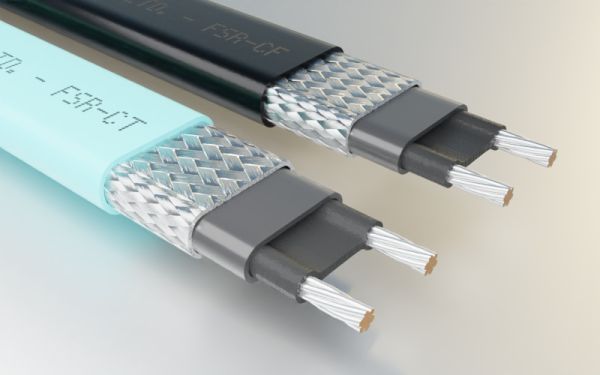

کابل هیت تریس خودتنظیم صنعتی Heat Trace Freezstop Regular (FSR)
سازنده: Heat Trace | نام محصول: Freezstop Regular | مدل: FSR | نوع محصول: کابل گرمایشی خودتنظیم | کاربرد: جلوگیری از یخزدگی و حفظ دمای فرآیندی
۱. معرفی کابل هیت تریس خودتنظیم FSR
کابل حرارتی Freezstop Regular (FSR) محصولی از شرکت Heat Trace است که برای جلوگیری از یخزدگی لولهها، مخازن و تجهیزات مرتبط و همچنین حفظ دمای سیالات در خطوط لوله طراحی شده است. این محصول از فناوری خودتنظیمشونده (Self-Regulating) استفاده میکند و توان حرارتی خروجی آن متناسب با تغییرات دما تغییر میکند.
در سیستمهای هیت تریس، کابل گرمایشی در امتداد لوله یا سطح تجهیز نصب میشود تا گرمای ازدسترفته را جبران کند و از افت بیش از حد دمای سیال جلوگیری شود. کابل FSR برای کاربردهای صنعتی، تجاری و تأسیساتی مناسب است؛ مشروط بر اینکه توان کابل، نوع روکش و شرایط نصب با نیاز پروژه مطابقت داشته باشند.
یکی از ویژگیهای مهم این محصول، قابلیت برش در طول موردنیاز در محل پروژه است. این قابلیت امکان تطبیق کابل با طول واقعی مسیر لولهکشی را فراهم میکند. همچنین فناوری خودتنظیمی به تغییر توان حرارتی متناسب با دمای کابل کمک میکند و در شرایط تعریفشده سازنده، خطر افزایش بیش از حد دما ناشی از همپوشانی کابل را کاهش میدهد.
۲. نحوه عملکرد فناوری خودتنظیم
کابل هیت تریس FSR از یک ماتریس نیمهرسانای خودتنظیمشونده برای تولید گرما استفاده میکند. مقاومت الکتریکی این بخش با تغییر دما تغییر میکند و در نتیجه، توان حرارتی کابل نیز متناسب با شرایط دمایی تغییر مییابد.
با کاهش دمای لوله، خروجی حرارتی کابل معمولاً افزایش پیدا میکند و با بالا رفتن دما، توان خروجی کاهش مییابد. این رفتار به جبران اتلاف حرارتی و محافظت از خطوط لوله در برابر یخزدگی کمک میکند.
خودتنظیم بودن به معنی ثابت بودن توان خروجی در تمام شرایط یا بینیازی از تجهیزات حفاظتی نیست. محاسبه بار حرارتی، تعیین طول مجاز مدار، انتخاب کلید حفاظتی و اجرای صحیح اتصالات همچنان ضروری است.
۳. کاربردهای اصلی کابل FSR
کابل حرارتی Freezstop Regular در کاربردهایی که به حفاظت در برابر یخزدگی یا جبران اتلاف حرارتی نیاز دارند، قابل استفاده است. مهمترین موارد کاربرد آن عبارتاند از:
جلوگیری از یخزدگی لولهها
کمک به محافظت از خطوط انتقال آب و سایر سیالات مناسب در برابر یخزدگی در شرایط محیطی سرد.
حفظ دمای فرآیندی
جبران اتلاف حرارتی خطوط لوله برای کمک به نگهداری سیال در محدوده دمایی موردنیاز فرآیند.
حفاظت از مخازن و تجهیزات
استفاده در سیستمهای مرتبط با مخازن و تجهیزات صنعتی، با رعایت الزامات طراحی و روش نصب.
تأسیسات ساختمانی و تجاری
محافظت از خطوط لوله و تأسیسات در معرض دماهای پایین، متناسب با شرایط محیطی و نیاز حرارتی.
سیستمهای سرمایش و تبرید
استفاده در بخشهایی از تأسیسات تبرید و سرمایش که به حفاظت در برابر یخزدگی نیاز دارند.
گرمایش الکتریکی خطوط لوله
استفاده بهعنوان بخشی از سیستم Heat Tracing برای جبران گرمای ازدسترفته از لولهها.
انتخاب توان متناسب با پروژه
امکان بررسی توانهای نامی مختلف بر اساس دمای محیط، دمای موردنیاز و میزان اتلاف حرارتی.
انتخاب روکش مناسب
امکان انتخاب نسخه CT یا CF با توجه به شرایط شیمیایی، خوردگی و الزامات محیط نصب.
۴. مشخصات فنی کابل Freezstop Regular
کابل FSR در چند سطح توان حرارتی و با دو نوع روکش اصلی عرضه میشود. مشخصات زیر برای معرفی خانواده محصول ارائه شدهاند و پیش از خرید یا طراحی نهایی باید با دیتاشیت و کد سفارش دقیق کابل تطبیق داده شوند.
نام محصول: Freezstop Regular
کد محصول: FSR
سازنده: Heat Trace
نوع کابل: خودتنظیمشونده (Self-Regulating)
کاربرد اصلی: جلوگیری از یخزدگی و حفظ دمای خطوط لوله
توانهای حرارتی نامی: ۱۰، ۱۷، ۲۵، ۳۱ و ۴۰ وات بر متر
ولتاژ تغذیه اعلامشده: ۱۲ تا ۲۷۷ ولت AC
حداقل دمای عملکرد: منفی ۴۰ درجه سانتیگراد
حداقل دمای نصب: منفی ۴۰ درجه سانتیگراد
حداکثر دمای مواجهه پیوسته در حالت روشن: ۸۵ درجه سانتیگراد
حداکثر دمای مجاز مواجهه در حالت خاموش: ۸۵ درجه سانتیگراد
حداقل شعاع خمش اعلامشده: ۳۵ میلیمتر
رزوه گلند کابل: M20
انواع روکش: CT و CF
قابلیت برش: متناسب با طول موردنیاز در محل نصب، مطابق دستورالعمل سازنده
۵. مزایا و ویژگیهای کلیدی کابل FSR
خروجی حرارتی خودتنظیم
تغییر توان گرمایشی متناسب با تغییرات دمای کابل و کمک به جبران اتلاف حرارتی.
قابلیت برش در محل
امکان آمادهسازی کابل در طول موردنیاز پروژه مطابق دستورالعمل سازنده.
کاهش خطر افزایش دما
فناوری خودتنظیمی به کاهش خطر گرمشدن بیش از حد در شرایط تعریفشده محصول کمک میکند.
تنوع توان حرارتی
وجود سطوح توان نامی مختلف برای بررسی و انتخاب متناسب با نیاز حرارتی پروژه.
تنوع روکش خارجی
امکان انتخاب روکش ترموپلاستیک یا فلوروپلیمری با توجه به شرایط محیطی.
انعطافپذیری در طراحی
قابلیت استفاده در مسیرهای مختلف لولهکشی و طراحی سیستمهای گرمایش الکتریکی.
اتصال با تجهیزات سازگار
امکان استفاده از کیتهای مناسب اتصال برق، آببندی انتهای کابل و ایجاد انشعاب.
کاربردهای متنوع
قابلیت استفاده در تأسیسات صنعتی، تجاری و سیستمهای حفاظت در برابر یخزدگی.
۶. انواع روکش کابل FSR؛ مدلهای CT و CF
کابل Freezstop Regular در دو نسخه اصلی با روکشهای CT و CF عرضه میشود. تفاوت اصلی این دو نسخه به جنس روکش خارجی و تناسب آن با شرایط شیمیایی و خوردگی محیط مربوط است.
مدل FSR-CT
دارای روکش خارجی ترموپلاستیک است و برای کاربردهایی قابل بررسی است که شرایط شیمیایی و مکانیکی محیط با مشخصات این روکش سازگار باشد.
مدل FSR-CF
دارای روکش خارجی فلوروپلیمری است و برای کاربردهایی که مقاومت شیمیایی و خوردگی بالاتری موردنیاز است، قابل بررسی خواهد بود.
انتخاب بین مدلهای CT و CF باید با توجه به نوع مواد شیمیایی، غلظت آنها، دمای محیط، شرایط نصب و الزامات پروژه انجام شود. روکش فلوروپلیمری نیز در برابر تمام مواد شیمیایی مقاوم نیست و سازگاری آن باید بررسی شود.
۷. دمای کاری و طبقهبندی دمایی
بر اساس مشخصات اعلامشده برای خانواده FSR، حداکثر دمای مواجهه پیوسته کابل در حالت روشن و حداکثر دمای مجاز مواجهه در حالت خاموش، هر دو ۸۵ درجه سانتیگراد هستند.
طبقهبندی دمایی اعلامشده برای مدلهای این خانواده به توان و نسخه کابل بستگی دارد:
مدلهای با توان حداکثر ۳۱ وات بر متر: کلاس دمایی T6، با حداکثر دمای سطح ۸۵ درجه سانتیگراد در شرایط طبقهبندی مربوطه.
مدل ۴۰ وات بر متر یا نسخه ۲۷۷ ولت: کلاس دمایی T4، با حداکثر دمای سطح ۱۳۵ درجه سانتیگراد در شرایط طبقهبندی مربوطه.
۸. نصب و راهاندازی کابل هیت تریس FSR
نصب کابل Freezstop Regular باید مطابق دستورالعمل سازنده، محاسبات حرارتی و الزامات ایمنی برق انجام شود. مراحل کلی اجرای سیستم به شرح زیر است:
۱. بررسی مسیر لولهکشی، جنس و قطر لوله و تعیین دمای موردنیاز سیال.
۲. محاسبه اتلاف حرارتی و تعیین توان مناسب کابل.
۳. محاسبه طول مدار و بررسی جریان راهاندازی متناسب با دمای شروع به کار.
۴. آمادهسازی سطح لوله و بررسی وجود لبههای تیز یا عواملی که ممکن است به کابل آسیب بزنند.
۵. نصب کابل مطابق نقشه طراحی و روش مجاز سازنده.
۶. استفاده از کیتهای سازگار برای اتصال برق، آببندی انتهای کابل و ایجاد انشعابها.
۷. بررسی اتصالات الکتریکی و انجام آزمونهای لازم پیش از عایقکاری.
۸. نصب عایق حرارتی و پوشش نهایی مطابق الزامات پروژه.
۹. انجام آزمونهای نهایی و بررسی عملکرد سیستم پیش از بهرهبرداری.
رعایت شعاع خمش مجاز، استفاده از تجهیزات اتصال سازگار و انتخاب صحیح حفاظت مدار اهمیت زیادی دارد. در محیطهای مستعد انفجار، تمامی اجزای سیستم باید با شرایط منطقه و تأییدیههای مربوطه مطابقت داشته باشند.
۹. تجهیزات جانبی موردنیاز
کیت اتصال برق
برای اتصال ایمن کابل حرارتی به منبع تغذیه، مطابق نوع کابل و دستورالعمل سازنده.
کیت انتهای کابل
برای آببندی و عایقکاری انتهای کابل و جلوگیری از نفوذ رطوبت به اجزای داخلی.
کیت انشعاب یا اتصال
برای ایجاد انشعاب یا اتصال بین بخشهای کابل، در صورت مجاز بودن در طراحی سیستم.
جعبه اتصال و گلند
برای حفاظت از اتصالات و ورود کابل با توجه به شرایط محیطی و درجه حفاظت موردنیاز.
تجهیزات حفاظت مدار
برای حفاظت الکتریکی متناسب با جریان راهاندازی، طول مدار و الزامات استاندارد.
عایق حرارتی مناسب
برای کاهش اتلاف حرارت و کمک به عملکرد مناسب سیستم گرمایش الکتریکی.
نوع و تعداد تجهیزات جانبی باید با توجه به کد دقیق کابل، تعداد مدارها، شرایط محیطی، الزامات حفاظتی و نقشه اجرایی پروژه تعیین شود.
۱۰. نکات مهم در انتخاب و طراحی سیستم
برای دستیابی به عملکرد مناسب کابل هیت تریس FSR، پیش از انتخاب و خرید باید اطلاعات فنی پروژه مشخص باشند. مهمترین پارامترهای طراحی عبارتاند از:
• قطر، جنس و طول لوله
• حداقل دمای محیط
• دمای موردنیاز برای نگهداری سیال
• نوع و ضخامت عایق حرارتی
• میزان اتلاف حرارتی خط
• ولتاژ تغذیه و طول مجاز مدار
• جریان راهاندازی و مشخصات تجهیزات حفاظتی
• نوع مواد شیمیایی و شرایط خوردگی محیط
• عادی یا مستعد انفجار بودن محل نصب
• نوع روکش و کد سفارش دقیق کابل
انتخاب کابل با توان بالاتر لزوماً به معنی عملکرد بهتر نیست. توان موردنیاز باید با محاسبات حرارتی مشخص شود و سپس طول مدار، شرایط الکتریکی، محدودیتهای دمایی و الزامات نصب بررسی شوند.
۱۱. جمعبندی؛ کابل هیت تریس خودتنظیم Freezstop Regular
کابل هیت تریس خودتنظیم صنعتی Heat Trace Freezstop Regular (FSR) راهکاری برای جلوگیری از یخزدگی و حفظ دمای خطوط لوله و تجهیزات مرتبط در کاربردهای صنعتی، تجاری و تأسیساتی است. فناوری خودتنظیمی، قابلیت برش در محل، تنوع توان حرارتی و امکان انتخاب بین روکشهای CT و CF از ویژگیهای اصلی این محصول محسوب میشوند.
این خانواده با توانهای نامی ۱۰، ۱۷، ۲۵، ۳۱ و ۴۰ وات بر متر و ولتاژ تغذیه اعلامشده ۱۲ تا ۲۷۷ ولت AC معرفی شده است. انتخاب مدل مناسب باید بر اساس اتلاف حرارتی، دمای موردنیاز، شرایط نصب، سازگاری شیمیایی روکش، طول مدار و الزامات ایمنی پروژه انجام شود.
Heat Trace Freezstop Regular (FSR) – Industrial Self-Regulating Heating Cable
Manufacturer: Heat Trace Ltd.
Industrial Self-Regulating Electric Heating Cable for Freeze Protection and Process Temperature Maintenance
1. Product Overview
The Heat Trace Freezstop Regular (FSR) is an industrial and commercial-grade self-regulating electric heating cable designed for freeze protection and process temperature maintenance in pipework, vessels and associated equipment. It is suitable for applications in the construction, refrigeration and industrial sectors where reliable electric heat tracing is required to prevent freezing and compensate for thermal losses.
The FSR incorporates self-regulating heating technology that automatically adjusts heat output in response to changes in local temperature. As the pipe temperature decreases, the cable generally increases its heat output. As the temperature rises, the output decreases. This characteristic helps provide heating where it is needed while supporting reliable operation under changing thermal conditions.
Freezstop Regular can be cut to the required length on site, allowing the heating cable to be adapted to the dimensions and layout of the actual installation. Its self-regulating construction is designed to resist overheating and burnout caused by cable overlap under the operating conditions specified by the manufacturer.
The FSR product range offers nominal heating outputs of 10, 17, 25, 31 and 40 W/m. Thermoplastic and fluoropolymer outer jacket options are available, allowing users to select a suitable cable configuration according to the thermal requirements, environmental exposure and chemical conditions of the installation.
2. Key Features and Benefits
- Self-regulating heating technology that automatically adjusts output according to local temperature conditions.
- Designed for freeze protection of suitable water pipes, process lines, vessels and associated equipment.
- Suitable for selected process temperature maintenance applications.
- Nominal heating outputs of 10, 17, 25, 31 and 40 W/m.
- Supply voltage range of 12–277 V AC/DC, subject to the specific cable configuration and manufacturer specifications.
- Cut-to-length installation to accommodate actual pipework dimensions.
- Designed to resist overheating and burnout caused by cable overlap under specified operating conditions.
- Maximum continuous exposure temperature of 85°C (185°F) while energized.
- Maximum permissible exposure temperature of 85°C (185°F) while de-energized.
- Minimum operating temperature of -40°C (-40°F), subject to the applicable product specifications.
- Minimum installation temperature of -40°C (-40°F).
- Thermoplastic and fluoropolymer outer jacket options.
- Minimum bending radius of 35 mm for the specified FSR-CT and FSR-CF versions.
- Compatible power connection, termination, end-seal and splicing accessories are available.
- Suitable for appropriately designed industrial and commercial heat-tracing systems.
- Hazardous-area suitability depends on the exact model, certification and installation requirements.
3. Technical Specifications
| Parameter | Specification |
|---|---|
| Manufacturer | Heat Trace Ltd. |
| Product Name | Freezstop Regular |
| Model Designation | FSR |
| Product Type | Self-Regulating Electric Heating Cable |
| Heating Technology | Self-Regulating Heating Matrix |
| Nominal Heat Outputs | 10, 17, 25, 31 and 40 W/m |
| Power Output Reference Conditions | Nominal ratings are specified under defined conditions. Refer to the manufacturer's output-versus-temperature curves for the applicable model and supply voltage. |
| Supply Voltage | 12–277 V AC/DC, subject to the specified cable configuration |
| Maximum Continuous Exposure Temperature, Power ON | 85°C (185°F) |
| Maximum Permissible Exposure Temperature, Power OFF | 85°C (185°F) |
| Minimum Operating Temperature | -40°C (-40°F) |
| Minimum Installation Temperature | -40°C (-40°F) |
| Minimum Bending Radius, FSR-CT | 35 mm |
| Minimum Bending Radius, FSR-CF | 35 mm |
| Cable Gland Thread Size | M20 |
| Protective Braid Resistance, Maximum | 18.2 Ω/km |
| Outer Jacket Options | Thermoplastic (FSR-CT) and fluoropolymer (FSR-CF) |
| Installation Method | Cut-to-length installation in accordance with manufacturer instructions |
| Temperature Classification | T6 for applicable configurations up to 31 W/m at nominal voltage; T4 for specified 40 W/m or 277 V configurations, subject to the applicable certification |
| Hazardous-Area Suitability | Subject to the exact model, certification and installation requirements |
| Primary Applications | Pipe and Vessel Freeze Protection, Process Temperature Maintenance, Selected Refrigeration Applications |
4. Typical Industrial and Commercial Applications
- Freeze protection of water supply and utility pipework.
- Freeze protection of suitable industrial process pipelines.
- Freeze protection of compatible tanks and vessels.
- Process temperature maintenance in industrial piping systems.
- Heat tracing for pipes carrying temperature-sensitive fluids.
- Selected refrigeration-related installations.
- Commercial building services and utility pipework exposed to low temperatures.
- Industrial manufacturing and process engineering installations.
- Outdoor pipework exposed to cold ambient conditions.
- Selected hazardous-area applications using appropriately approved cable configurations.
- Industrial equipment requiring protection against freezing.
- Applications where supplementary heat is required to compensate for pipework heat loss.
5. Self-Regulating Heating Technology
Freezstop Regular uses a self-regulating heating matrix whose electrical resistance changes in response to temperature variations. This characteristic allows the cable to adjust its local heat output according to the thermal conditions along the pipe or equipment.
When the surrounding pipe temperature decreases, the cable generally increases its heat output to help compensate for greater heat loss. As the pipe temperature rises, the output decreases. Unlike a conventional constant-output heating element, a self-regulating cable can deliver different levels of heating along its length as local temperatures vary.
This technology is particularly useful for pipework exposed to changing ambient conditions or installations where different sections experience different heat losses. It can support more responsive temperature maintenance without requiring the cable to produce the same fixed output under all operating conditions.
Actual heat output depends on the exact cable model, supply voltage, pipe temperature, installation arrangement, thermal insulation and environmental conditions. A heat-loss calculation and consultation of the manufacturer's output curves are necessary to confirm that the selected cable can maintain the required temperature.
6. Available Outer Jacket Options
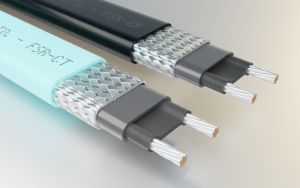
FSR-CT – Thermoplastic Outer Jacket
The FSR-CT version features a thermoplastic outer jacket over the protective metallic braid. It is intended for applications where the environmental and chemical conditions are compatible with the selected jacket material.
- Thermoplastic outer jacket.
- Protective metallic braid beneath the outer jacket.
- Suitable for compatible industrial and commercial environments.
- Minimum bending radius of 35 mm, subject to the specified model documentation.
- Requires verification of chemical compatibility and environmental suitability.
FSR-CF – Fluoropolymer Outer Jacket
The FSR-CF version features a fluoropolymer outer jacket intended for applications requiring resistance to certain corrosive chemicals and more demanding environmental conditions.
- Fluoropolymer outer jacket.
- Designed for environments where the selected fluoropolymer provides suitable chemical resistance.
- Suitable for compatible industrial applications.
- Minimum bending radius of 35 mm, subject to the specified model documentation.
- Requires verification against the actual chemicals, concentrations and exposure temperatures.
The correct jacket must be selected according to the chemicals present, their concentration, exposure temperature, moisture conditions, mechanical requirements and project specifications. Neither thermoplastic nor fluoropolymer materials should be assumed to be resistant to every chemical.
7. Operating Temperature and Temperature Classification
The maximum continuous exposure temperature of Freezstop Regular while energized is 85°C (185°F). The maximum permissible exposure temperature while de-energized is also 85°C (185°F). These limits must be considered when selecting the cable for the intended process and installation environment.
The supplied product information identifies the following temperature classifications for applicable configurations:
- T6: Applicable configurations rated up to 31 W/m at nominal voltage, corresponding to a maximum surface temperature of 85°C under the relevant classification conditions.
- T4: Specified 40 W/m or 277 V configurations, corresponding to a maximum surface temperature of 135°C under the relevant classification conditions.
Temperature classification and maximum continuous exposure temperature are different technical parameters. The classification describes the maximum surface temperature under the conditions specified by the applicable certification, while the exposure temperature defines the permitted thermal exposure of the cable under the manufacturer's stated conditions.
For hazardous-area installations, the exact cable configuration, temperature class, power connection components, accessories and installation method must comply with the relevant certification and site requirements. The applicable documentation must be checked before the product is specified for a classified location.
8. Installation and Accessories
Freezstop Regular is designed for installation using compatible power connection, termination and end-seal kits. Installation must follow the manufacturer's instructions and the applicable electrical and hazardous-area requirements.
Before installation, assess the pipework, operating temperatures, minimum ambient temperature, insulation requirements and calculated thermal losses. Select the cable output and jacket configuration according to the design conditions and verify that the required circuit length is within the permitted limits.
Prepare the pipe surface and position the cable using the approved installation method. Avoid excessive mechanical tension, crushing, sharp bends and damage to the cable jacket. Observe the minimum bending radius of 35 mm for the specified FSR-CT and FSR-CF versions.
Use compatible power connection kits, end seals, splices, junction boxes and cable glands. Provide appropriate electrical circuit protection, protective earthing and any additional protection required by the applicable regulations.
Where thermal insulation is used, select its material and thickness according to the design temperature and environmental conditions. Install suitable protective cladding where required to protect the insulation and heating cable from moisture or mechanical damage.
Before commissioning, complete the required electrical inspections and tests. Electrical connections and terminations must be performed by suitably qualified personnel in accordance with the manufacturer's instructions and applicable regulations.
Typical Accessories
- Compatible power connection kits.
- End-seal and termination kits.
- Splicing and connection kits.
- Suitable junction boxes and M20 cable glands, where applicable to the selected system.
- Electrical circuit protection and grounding components.
- Cable attachment materials and installation accessories.
- Thermal insulation and protective cladding.
- Temperature monitoring or control equipment, where required by the system design.
Accessory compatibility must be confirmed for the exact cable model and installation conditions. Do not assume that accessories designed for another heating cable series are suitable without confirmation from the manufacturer.
9. Maximum Circuit Length and Electrical Design
The maximum permissible circuit length depends on the cable output rating, supply voltage, minimum start-up temperature, circuit-breaker rating and characteristics, starting current and installation conditions.
Self-regulating heating cables typically draw a higher current during cold start-up than during stabilized operation. The electrical circuit must therefore be designed using the manufacturer's maximum-circuit-length tables for the exact cable rating, supply voltage, start-up temperature and protective device.
Circuit-breaker selection must comply with the manufacturer's recommendations and applicable electrical standards. Nominal wattage alone is insufficient to determine the maximum circuit length, starting current or appropriate protective device.
The electrical design should also consider supply cable sizing, protective earthing, fault protection and any additional measures required by the installation environment or hazardous-area classification.
10. Advantages of Freezstop Regular FSR
- Reliable freeze protection for suitable pipework, vessels and associated equipment.
- Flexible nominal output options of 10, 17, 25, 31 and 40 W/m.
- Automatic adjustment of heat output according to local temperature conditions.
- Cut-to-length installation for flexible cable


